

our offering
The Healthy Honey model is built on progressive overload and intelligent strength training. Based on your goals, we follow a structured 6-week training block where key movements are repeated long enough to drive real progress—whether that’s increasing reps or weight, refining form, or improving control and capacity.
Progress is measured in multiple ways and assessed at the end of each 6-week period. Programming is refreshed every quarter to provide variety, address new goals, and continue building well-rounded strength.
We offer 4, 8, or 12-session packages. With purchase of any package, you'll receive a complimentary BodySpec scan. Scans are recommended every quarter to support outcome-based training.
Please contact me for specific pricing and availability
Sara Otto
Sara is an attentive, knowledgeable, and intelligent personal trainer who truly cares about your progress. She pushes you in all the right ways while making every session fun with her great personality. I always feel supported, motivated, and stronger after working with her — highly recommend!
Melissa G
Sara is an amazing trainer! She’s knowledgeable, motivating, and truly cares. Her workouts are challenging but doable, and she always makes sure you feel confident and supported. I’ve gained so much strength and confidence training with her. Highly recommend!
Mayra J
our method
1
outcome based training
Training is guided by measurable outcomes, not aesthetic hype. Healthy Honey uses structured training blocks so progress can be tracked, assessed, and adjusted intentionally. With every training block, clients receive a complimentary BodySpec scan to objectively measure changes in body composition and overall health. Strength, longevity, and internal health markers matter more than chasing trends.
2
non-negotiable injury prevention
Progress means nothing if it comes at the cost of pain or long-term setbacks. Every program prioritizes joint integrity, movement quality, and intelligent loading so clients can train consistently and confidently—now and years from now.
3
progressive, intelligent strength
No random workouts. No novelty for novelty’s sake. Training follows a structured progression where movements are repeated long enough to build real strength. Loads increase, reps improve, and technique refines over time. This approach develops lean muscle, joint stability, and confidence without overwhelming the nervous system.
4
body awareness
Every exercise is evaluated not just by how it looks, but by how it feels on a 0-10 scale. Sessions emphasize internal cues, muscular engagement, and controlled effort so clients learn the difference between healthy fatigue and compensatory strain. Awareness is a skill—and it’s trained intentionally.
5
sustainable coaching
Consistency beats intensity. The goal is not 100% effort at all times, but an approach that can be maintained long-term. Training is designed around lifestyle integration, not burnout. This is not a one-month reset or a quick-fix program—it’s a framework that evolves with you and remains a steady pillar of health over time.
6
recovery & mobility integration
Progress doesn’t happen during workouts — it happens between them. Training intensity, volume, and frequency are adjusted based on recovery capacity, stress levels, and real-life demands. Every session includes intentional mobility and stretching, selected to support the day’s lifts, restore joint range of motion, and reinforce long-term movement quality. Rest, deloads, tempo, session pacing, and recovery work are treated as tools, not weaknesses.
book an intro session
This introductory session is designed for first-time clients only and is assessment-focused by intention.
Your intro session is a 1:1 movement and strength assessment centered on how your body moves, feels, and responds to load. We’ll evaluate movement patterns, strength, mobility, and current limitations while calibrating intensity using a 0–10 effort scale.
The goal is to gather meaningful data—not to push maximum intensity. Training emphasizes injury prevention, proper mechanics, and intelligent progression, so you leave feeling informed and aligned, not exhausted.
This session is ideal if you:
• Want results without sacrificing joint health
• Are returning from injury or want to prevent one
• Feel burned out by high-intensity or chaotic workouts
• Want to build real strength in a sustainable way
What to expect:
• Guided warm-up and movement assessment
• Targeted strength work used to assess capacity and control
• Coaching focused on form, control, and body awareness
• A clear, pressure-free recommendation for next steps
All levels welcome. This session establishes your baseline and determines whether ongoing training is a good fit.
FAQs
Do I need training experience?
Absolutely not. Beginners are more than welcome—and often ideal. We’ll make sure you start on the right foot with safe, proper form and a clear progression. For more experienced lifters, we’ll assess movement patterns, fine-tune technique, and program workouts that are appropriately challenging—so you can focus on training, not overthinking.
What should I bring?
Comfortable workout clothes, water, and any supportive or protective gear you may need due to past or current injuries.
What if I have an injury?
If you’ve had a significant injury, we may ask for clearance from your doctor before training. All injuries are taken seriously and considered carefully in your program. In many cases, we can train around limitations without them becoming a barrier to progress.
Where are sessions held?
Self-Made Training Facility in Westside Costa Mesa
740 W 16th St, Costa Mesa, CA 92627
How often should I train?
We typically recommend training 2–3 times per week, which is the sweet spot for building strength, improving movement quality, and allowing your body adequate time to recover.
Training only once per week often isn’t enough stimulus to drive consistent progress or reinforce movement patterns. On the other hand, training more than four times per week can make recovery difficult—especially when strength training is done with intention. Muscles, joints, and the nervous system all need time between sessions to adapt and rebuild.
At 2–3 sessions per week, you get:
-
enough frequency to build strength and skill
-
adequate recovery to prevent burnout and injury
-
consistent progress without overwhelming your system
When appropriate, I may recommend supplemental activities—such as walking, mobility work, or cardio—that support your training without competing with recovery.
session structure
targeted warmup - 5 mins
Warm-ups are purposeful and specific—never generic. Each session begins with targeted tissue preparation and movement rehearsal designed to support the day’s lifts.
This approach helps:
-
prepare joints and muscles efficiently
-
reinforce proper movement patterns
-
reduce injury risk
-
eliminate wasted time
Rather than long or random warm-ups, we assume a baseline of readiness and build just enough ramp to train well.
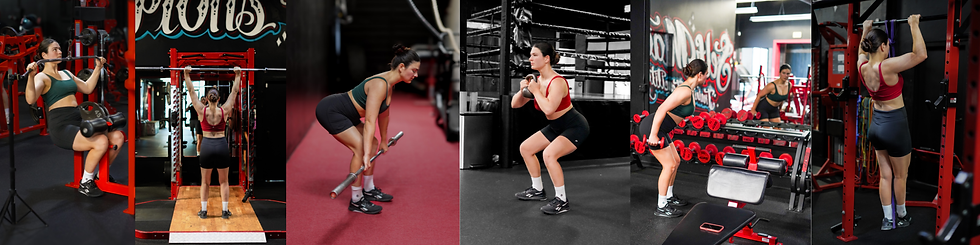
focused strength training - 45 mins
This is the core of the session—and it’s more than enough.
Most sessions include approximately 5–6 primary movements, allowing time for:
-
multiple high-quality sets
-
appropriate rest between efforts
-
real-time coaching and technique refinement
This pacing supports:
-
progressive strength gains
-
nervous system recovery
-
form-first, sustainable training
Quality work takes time, and this structure ensures strength is built intentionally—not rushed.
recovery & downregulation - 10 mins
Every session ends with guided mobility and stretching to support recovery and nervous system regulation.
This phase helps:
-
reduce next-day soreness
-
improve recovery between sessions
-
support long-term joint health
-
create a calm, grounded finish to the workout
Recovery is not an afterthought—it’s built into the session.
why it matters!
Training doesn’t end when the last set is completed. A session that begins intentionally and ends with recovery supports consistency, resilience, and progress over time.
This structure allows clients to train hard and recover well—week after week.
about me :)
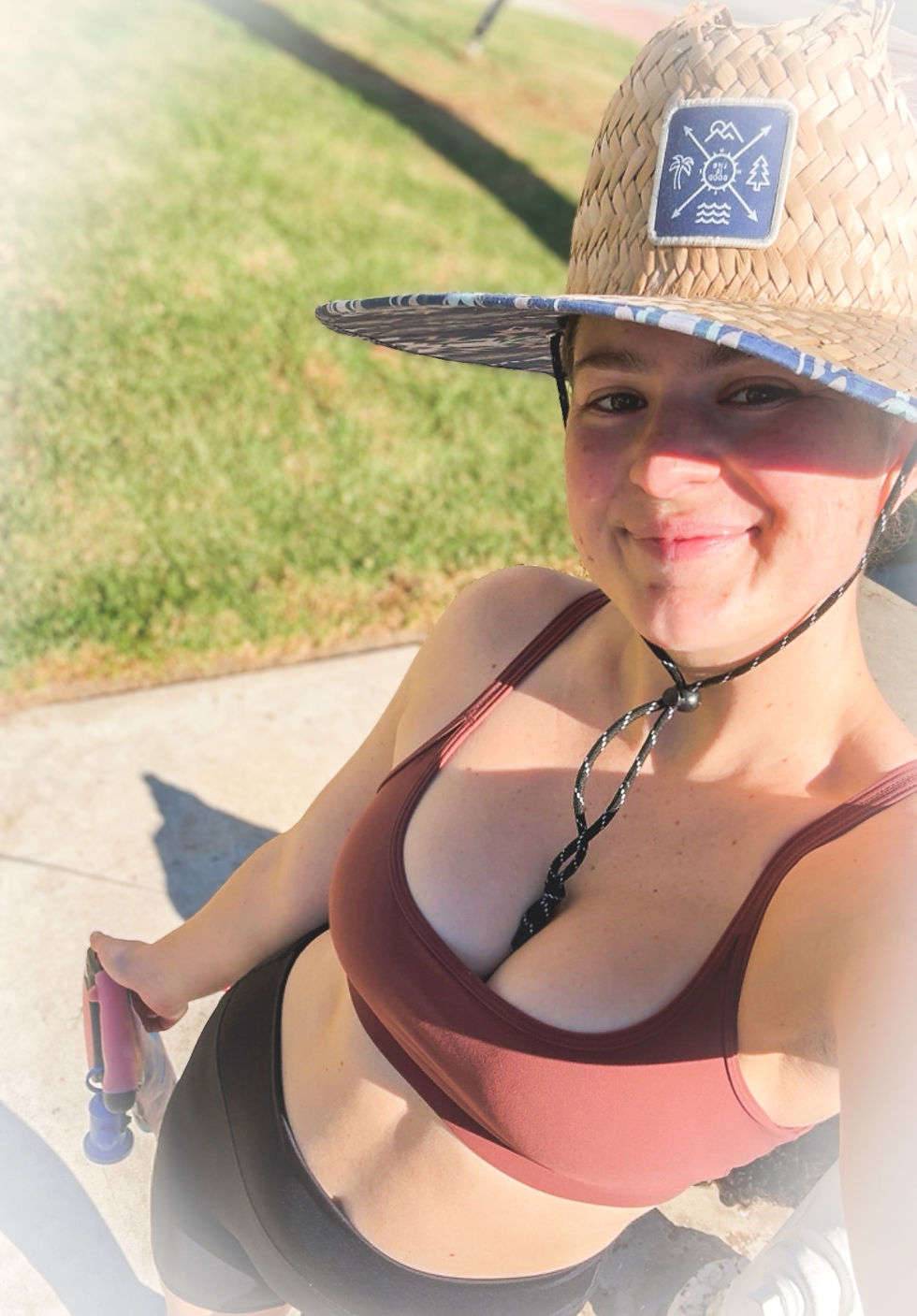
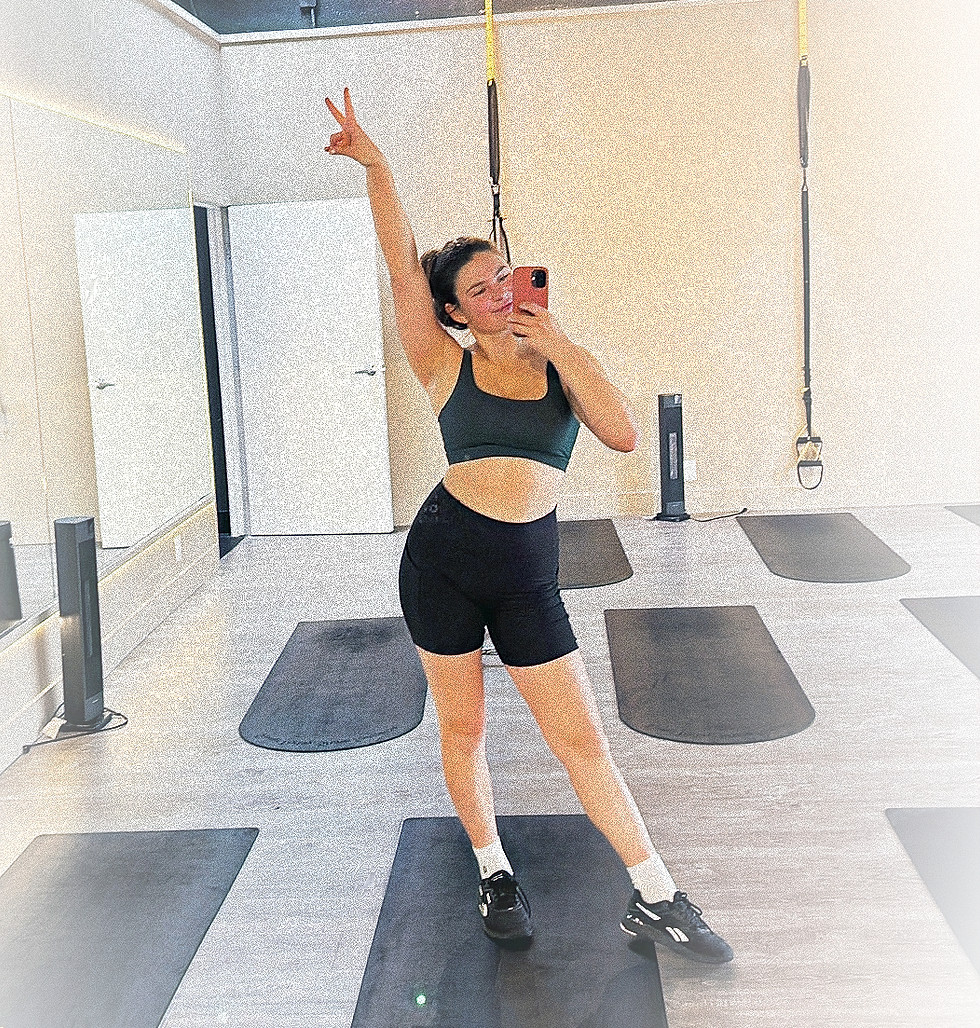
I coach with the belief that movement should feel empowering, not intimidating — meeting you where you are while encouraging steady progress. My goal is to help you feel capable in your body, supported in your practice, and energized long after class ends.
Fitness has been a constant in my life for over ten years, helping me to stay grounded and reconnect with myself through both highs and lows. I see strength and wellness as foundational to living, and I’m passionate about helping others experience those benefits in their own lives.
Outside of the studio, I love surfing, photography, cooking, thrift shopping, music, my bernedoodle Susan, and spending time with my partner, Clayton. We also run Honey Homes as a contractor/realtor duo. Check it out!